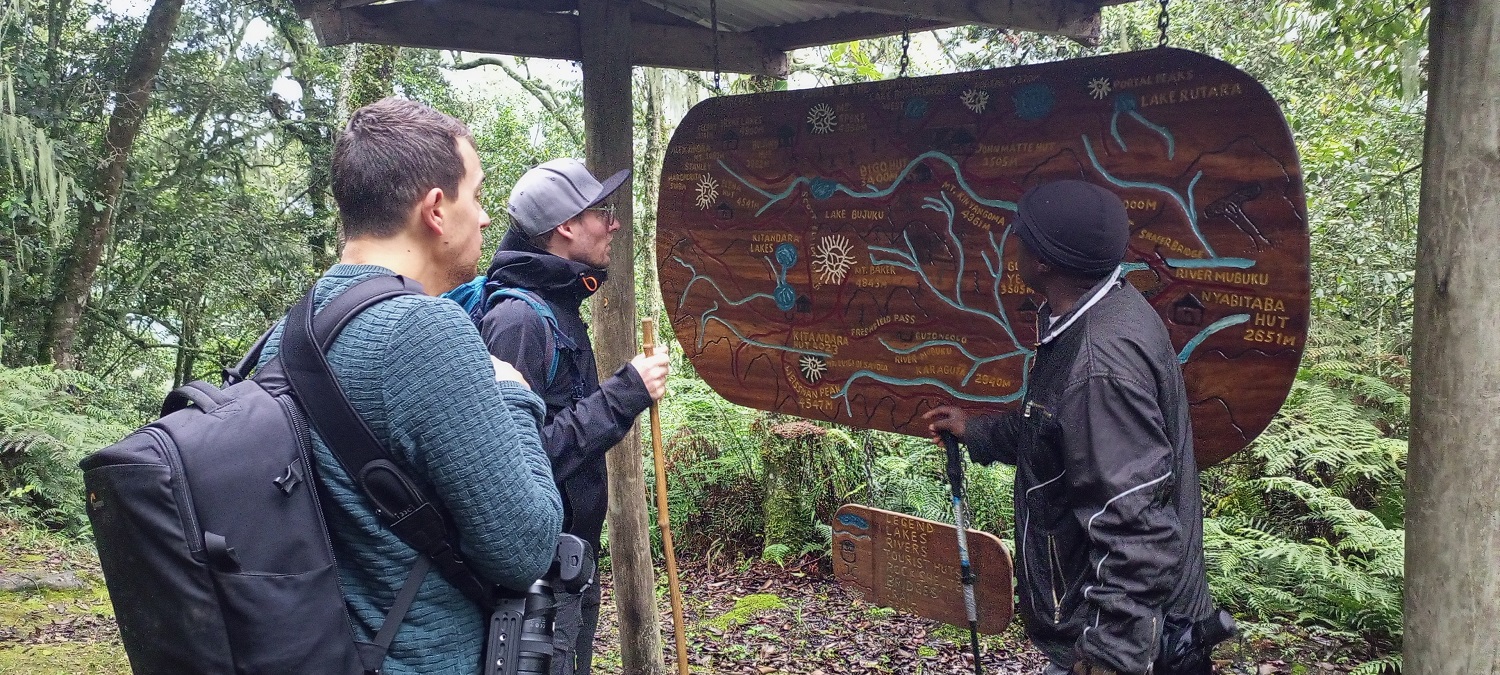
How difficult is trekking the Rwenzori?
Difficulty varies by trail. Nature walks are suitable for most visitors with reasonable fitness, while summit expeditions require excellent physical preparation and several days of trekking.
Can beginners climb Margherita Peak?
Yes, provided they are physically fit, adequately prepared and accompanied by licensed guides. The summit day includes technical sections requiring specialised equipment and guidance.
Do I need a guide?
Yes. Multi-day trekking is conducted with authorised guides in accordance with Uganda Wildlife Authority regulations. Guided nature walks are also strongly recommended.
Can I trek alone?
Independent trekking on the high mountain routes is generally not permitted. Visitors should arrange their trek through authorised operators and guides.
How many days should I allow?
· Nature walks: 2–8 hours
· Community trails: 1–2 days
· High mountain trekking: 4–6 days
· Margherita Peak expeditions: 7–9 days
What is the food and diet like during the trek?
Food on the Rwenzori is an important part of keeping trekkers warm, strong and energized. Breakfast is usually hot and filling, with porridge, eggs, chapati, pancakes, toast and tea, coffee or hot chocolate. Lunch is often carried on the trail or cooked fresh. it may include sandwiches, boiled eggs, fresh fruit, biscuits and energy snacks. Dinner at camp is more substantial, commonly starting with soup, followed by rice, pasta, potatoes or baked products with chicken, beef, beans or lentils and vegetables, plus fruit or a simple dessert.
Clean mountain stream water is collected and boiled before being served. Trekkers can also use purifying pills to clean the water, though local guides and porters just drink it straight from the river. Trekkers may also carry personal snacks such as nuts, chocolate, glucose gels or electrolyte mixes. Vegetarian, vegan and other dietary needs can be accommodated when communicated to the trekking operator in advance.
What is the highest point?
Margherita Peak on Mount Stanley, at 5,109 metres (16,762 feet) above sea level.
Is altitude sickness common?
Some trekkers experience mild symptoms above 2,500 metres. Proper acclimatisation, hydration and following your guide's advice significantly reduce the risk.
Can children visit?
Yes. Families can enjoy nature walks, community tourism experiences and cultural activities. High-altitude expeditions are generally more suitable for older teenagers and adults.
Is the Rwenzori safe?
Yes. The park is professionally managed by the Uganda Wildlife Authority, and licensed operators follow established safety procedures. As with any wilderness destination, visitors should follow official guidance and remain with their guides.
What wildlife will I see?
The Rwenzori is home to monkeys, duikers, forest birds, chameleons, butterflies and numerous Albertine Rift endemic species. Wildlife sightings vary with altitude and season.
Will I see snow?
Snow is normally found only on the highest peaks, particularly around Mount Stanley, Mount Baker and Mount Speke. Visitors on lower-elevation trails should not expect to encounter permanent snow.
Where can I stay on the night (s) before and after the Rwenzori trek?
The ideal place to sleep on the night before and after the Rwenzori trek is Ruboni Tourism village. Ruboni village is a Best Tourism Village. This is an award winning destination recognized by UNWTO for her Responsible tourism story. Ruboni village has up to ten stays including lodges, campsites and homestays to select from based on your desired level of comfort and budget.
Can I combine the Rwenzori with other parks?
The ideal place to sleep on the night before and after the Rwenzori trek is Ruboni Tourism village. Ruboni village is a Best Tourism Village. This is an award winning destination recognized by UNWTO for her Responsible tourism story. Ruboni village has up to ten stays including lodges, campsites and homestays to select from based on your desired level of comfort and budget.
Can I combine the Rwenzori with other parks?
Yes. Many visitors combine a Rwenzori trek with:
· Queen Elizabeth National Park
· Kibale National Park
· Semuliki National Park
· Bwindi Impenetrable National Park
This creates an excellent western Uganda itinerary featuring wildlife, primates, mountains and cultural experiences.
How does my visit benefit local communities?
Your visit contributes through:
· Employment of guides and porters.
· Community-owned accommodation.
· Purchase of local food and crafts.
· Cultural tourism activities.
· Uganda Wildlife Authority's revenue-sharing programme.
· Support for conservation initiatives.
Tourism is one of the most important sustainable livelihood opportunities for communities living around the Rwenzori Mountains.
Final thought
Final thought
The Rwenzori Mountains are unlike any other mountain destination in Africa. From ancient rainforests and giant lobelias to glaciers near the Equator and the vibrant culture of the Bakonzo people, they offer an extraordinary combination of adventure, science, conservation and heritage.
Whether you come to summit Margherita Peak, explore rainforest trails, conduct research or simply experience one of the world's most remarkable mountain landscapes, careful preparation and responsible travel will ensure that your journey is both rewarding and sustainable.
By choosing licensed operators, respecting local communities and supporting conservation, every visitor helps safeguard the legendary Mountains of the Moon for generations to come.