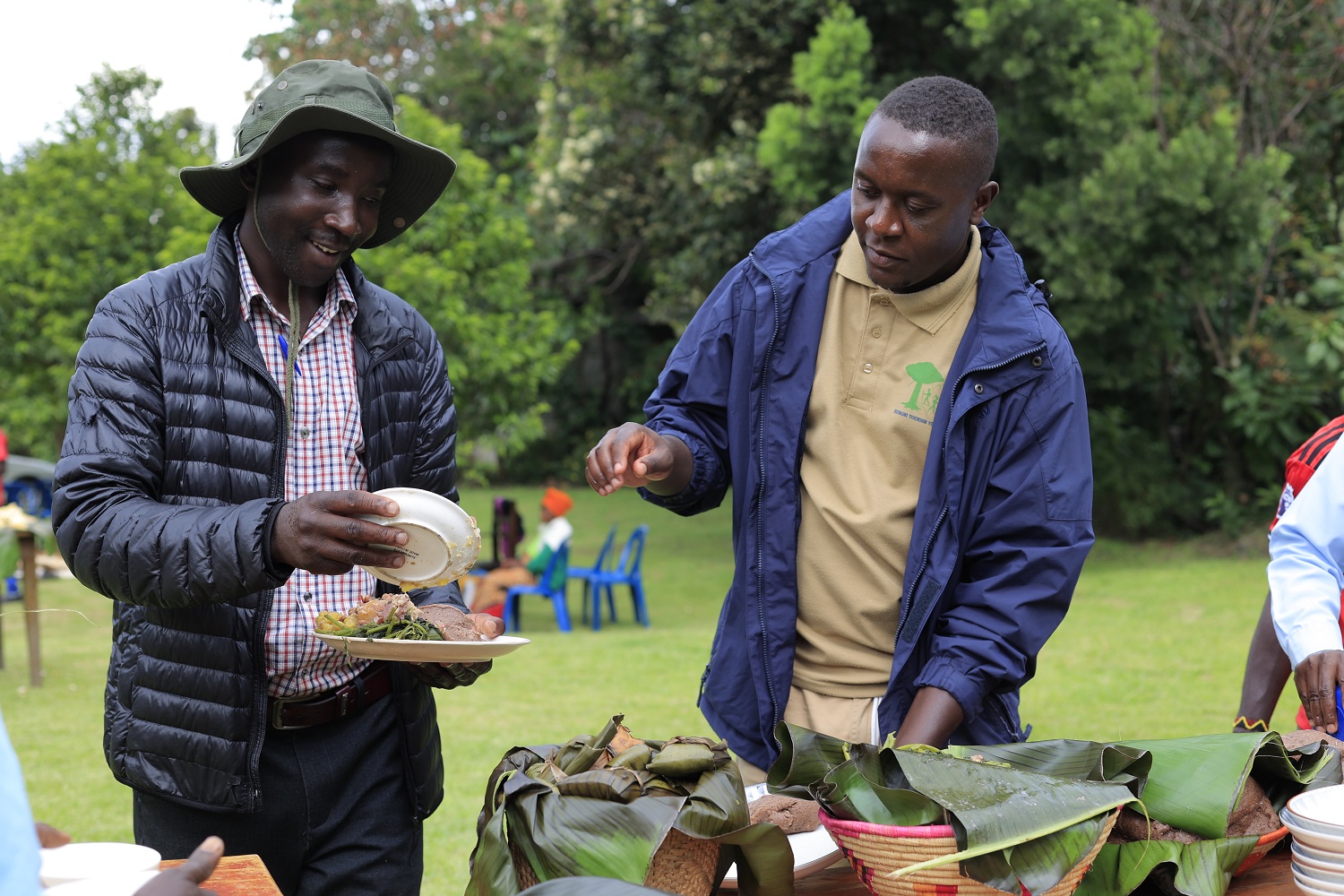
Planning to visit the Rwenzori Mountains or Queen Elizabeth National Park and looking for an authentic Ugandan cultural experience? A Rwenzori food experience tour offers a simple way to go beyond wildlife and mountain scenery, and connect with Uganda through food, local people, stories, traditions and everyday life.
For travelers visiting Uganda for the first time, food can be one of the easiest ways to understand a new culture. A meal prepared by a local host can tell you something about the crops grown in the area, the way families live, the importance of community, traditional cooking methods and the relationship between food and the surrounding landscape. When you participate in the cooking yourself is even epic!
The Rwenzori region is particularly interesting because the mountains are not simply a destination for hiking and climbing. They are also home to communities whose lives, cultures and livelihoods have developed around the mountain environment.
A food experience gives visitors an opportunity to meet people in a more personal setting, learn about local ingredients and participate in food preparation rather than simply passing through a village on the way to a national park.
And if you have previously struggled to find or book cultural activities in Uganda, this experience is designed to make the process clearer: know what you are booking, know what you are paying for, understand how payment works, and communicate directly with the indigenous tribe members; the experience provider before your visit. you can read more about how to book a rwenzori food experience tour here
Quick Answer: What Is a Rwenzori Food Experience Tour?
A Rwenzori food experience tour is a community-based cultural experience where visitors discover Uganda through local food, hervesting, cooking, conversation and interaction with people living around the Rwenzori Mountains.
Depending on the experience you book, you may learn about local ingredients, participate in hervesting the ingredients, preparing a meal, discover traditional cooking practices, taste locally prepared dishes with the locals on the same meal of your hands, hear stories about food, drinks, music / dance and culture, and spend time with community members learning other processes of the Bakonzo life and livelihoods.
The experience is suitable for travelers visiting the Rwenzori Mountains, Kasese, Queen Elizabeth National Park and western Uganda, including visitors who are interested in sustainable tourism and want their travel spending to have a direct connection with local communities.
The important difference is that you are not simply buying a meal. You are booking an experience around the meal, and eating the meal is your choice.
A 30-year experience of Community Tourism in Ruboni awaits you on this food experience. The Bakonzo people in Ruboni village have worked through responsible tourism for many years until they have been awarded by United National work tourism Organsiation (UNWTO) as a Best Tourism villages in 2024 for the great work they are responsibly doing, practicing tourism to empower the local populations, preserve their cultures, build the local economy, and conserve the natural habitat in the Rwezori mountain foothills.
As part of Ruboni village responsible tourism, guests are invited to book and join the rest of the community on the cultural food ceremonies scheduled on Sunday and other special days of the week. It is therefore important to check availability before one plans to join this Rwenzori food experience tour.
Globaisation has stuck everywhere. Through the week, people in kasese eat everything, at work places and in town Hotels while the Bakonzo indigenous people in Ruboni village enjoy their cultural foods. It is only on Sunday and other selected days, that the public is invited in ruboni village with their families and friends to come and eat local cuisine and experience the cultural vibes around it. This event is a great opportunity for visitors to see local Ugandan culture in real time.
6 reasons why book a food experience in the Rwenzori Mountains?
Uganda is often introduced to international visitors through its wildlife, national parks, gorillas, chimpanzees and mountains. Those experiences are important, but they do not tell the whole story of the country.
Uganda's cultural diversity is reflected in its languages, traditions, foods, agricultural practices and community life. The Uganda Tourism Board also identifies culinary and community experiences among the country's cultural tourism opportunities. Therefore, a food experience gives you another way to discover Uganda. Of all the 56 tribes, the Bakonzo culture is still off the beaten path of Uganda. This food experience is the opportunity to grab your chance of entering into the Bakonzo hidden culture.
1. Meet Uganda through its food
Food is a practical introduction to culture. Instead of only photographing a landscape or visiting a tourist attraction, you will sit down with local people and discover what they eat, where ingredients come from and how particular foods are prepared.
You may discover ingredients and dishes that you would never have encountered while eating exclusively at hotels and safari lodges.
The experience also helps answer questions that you may have about life in Uganda:
- What do Ugandans eat at home?
- Which foods are locally grown?
- How are traditional meals prepared?
- What ingredients are common in Rwenzori region of Uganda?
- What foods are eaten on special occasions?
- How does food production connect with the surrounding environment?
- What is the difference between food prepared for tourists and food prepared for local families?
These conversations around food can become some of the most inspiring and memorable parts of a Uganda trip.
2. It Adds Culture to a Rwenzori Mountain Adventure
The Rwenzori Mountains are famous for hiking, trekking, dramatic landscapes, forests, wildlife, high-altitude vegetation and the spectacular peaks of the Mountains of the Moon.
Through the food experience, you feel the breath of the mountains as a living cultural landscape. The Rwenzori region is associated with communities including the Bakonzo, Batooro and Bamba, among others. Uganda Tourism Board has highlighted the importance of the Rwenzori ecosystem alongside the culture and heritage of communities living around the mountains.
This makes a food experience a natural complement to a mountain trip. You can spend part of your journey walking through the mountains and another part learning how people living around those mountains grow, prepare and enjoy their food. That combination creates a more complete understanding of the destination.
3. It Is More Than a Restaurant Meal
There is an important difference between eating local food at a restaurant and taking part in a food experience. At a restaurant, the focus is usually on the finished meal. During a food experience, the journey to the plate becomes part of the story.
During this cultural tour,You will have the opportunity to:
- Visit the garden where the food is grown and harvest
- Meet your local hosts who grow the food on their daily basis as a livelihood
- Learn about ingredients.
- See how food is prepared.
- Participate in cooking.
- Ask questions about local traditions.
- Learn about farming and household food production.
- Discover traditional cooking techniques.
- Taste locally prepared food.
- Share a meal with your hosts.
- Learn about everyday life in the community.
Important to note: The exact activities should always be confirmed with the experience provider before booking because food experiences can differ according to the host, season, group size and package selected.
4. Your trip Money Can Support Local People
For travelers interested in sustainable tourism, one of the most important questions is: Where does my tourism money go?
Community-based tourism can create opportunities for local people in Ruboni Village to earn income from tourism while sharing their knowledge, culture and skills. Uganda's tourism authorities describe sustainable and inclusive tourism as part of the country's tourism development objectives. By joining this experience, you support a national sustainability goal that also feeds in your sustainability dreams.
A locally organized food experience can potentially distribute tourism income more directly among people involved in hosting, cooking, guiding, farming, storytelling, transport and other supporting services. All the food incredients are bought from the local women. This also helps empower them through tourism.
However, travelers should not assume that every cultural activity is automatically community-owned or sustainable. That is why it is reasonable to support Ruboni Tourism village – a four-time award winner in the field of sustainable tourism, the latest being a Best Tourism Village by United Nations World Tourism Organization:
This activity is organized by the locals, and all payments are processed locally with all profits going back to the local community projects that support conservation and community development. This is why, every responsible traveler, tour agent or operator will be comfortable adding this Rwenzori food experience tour to their trip.
5. It Works Well Before, during or After a Safari
The food experience does not have to replace your safari. It can complement it.
If you are visiting Queen Elizabeth National Park, for example, your itinerary may already include wildlife viewing, boat activities, nature walks or other attractions.
Adding a community food experience around the Rwenzori region gives your trip a different dimension. Instead of spending the entire journey moving between parks, lodges and attractions, you can make time for an experience centered on people. This is particularly valuable for travelers who want to understand Uganda rather than simply photograph it. It is never late to join this experience, you can book your spot any time from now or during the safari. The team will guide you how to flexibly add the experience to your safari without changing a thing.
6. It Is Suitable for First-Time Visitors to Uganda
If you’re a first-time visitor, you may have many questions about cultural activities. You may wonder:
- Is this activity genuine?
- Is it safe to book?
- Who should I contact?
- How far is the experience from my hotel?
- What is included?
- Do I need cash?
- Can I pay by card?
- Should I pay in dollars or Uganda shillings?
- Do I pay before arrival?
- What happens if my itinerary changes?
- Is transport included?
- How long does the experience take?
- Can I combine it with my safari?
Those are sensible questions. A good booking process should not make you feel uncomfortable for asking them. The objective is to make the experience understandable before you commit to payment. You can read our next article about How to book a Rwenzori food experience tour where all these questions are already answered.